

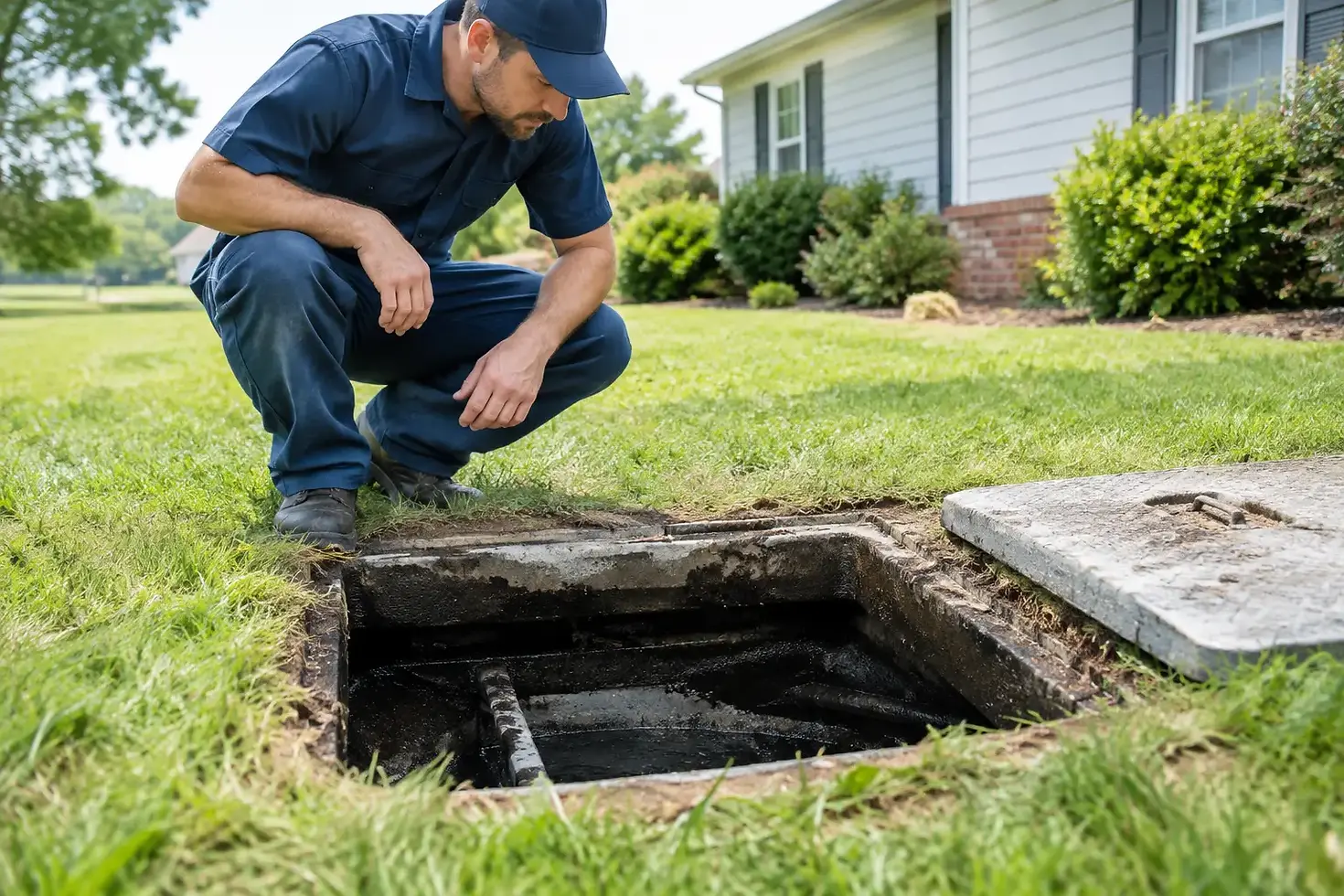
A Septic Failure Example Homeowners Should Know

A septic failure example often starts quietly: a patch of grass stays wet long after the rest of the yard dries, drains begin moving slowly, and a sewage odor appears near the tank or leach field. Then spring rain arrives, the ground becomes saturated, and wastewater has nowhere left to go. What looked like a minor drainage issue becomes a property problem that needs prompt, informed action.
For homeowners in Southern New Hampshire and Massachusetts, this is not a problem to cover with gravel, topsoil, or a quick pipe repair. A septic system works only when the tank, distribution components, soil, grading, and groundwater conditions all work together. When one part fails, the symptoms can show up somewhere else entirely.
A Realistic Septic Failure Example
Consider a home with a septic tank and leach field that had worked for years without trouble. The owners notice the lawn above the leach field is unusually green and soft. At first, they assume it is a drainage issue caused by snowmelt. A few weeks later, toilets begin gurgling after the washing machine drains, and water slowly backs up in the lowest shower.
The tank is pumped, which temporarily improves the drains. But within a month, the same symptoms return. A closer site review finds that the leach field soil is saturated and no longer accepting effluent at the rate the home produces it. The original system may also be undersized for the current number of bedrooms, poorly graded, damaged by vehicle traffic, or affected by rising seasonal groundwater.
The tank was not necessarily the root problem. Pumping it relieved pressure for a short time, but it did not restore the soil's ability to treat and disperse wastewater. That distinction matters. A septic system can appear to fail at the tank or inside the house while the real issue is in the field, site drainage, or an installation that was never designed correctly for the lot.
What a Failing Septic System Can Look Like
No single symptom proves that a septic system has failed. Slow drains can come from a clog in the house plumbing. A wet yard can be caused by surface runoff, a broken water line, or poor grading. But several warning signs happening together deserve immediate attention.
Watch for sewage odors around the tank, leach field, or drains inside the home. Pay attention to wastewater surfacing on the lawn, unusually lush strips of grass over the field, toilets that flush slowly or gurgle, and recurring backups in lower-level fixtures. If wastewater is backing up into the home or coming to the surface outdoors, limit water use and contact a qualified septic professional right away. Wastewater exposure is a health concern, not a weekend repair project.
A failed septic system can also affect the rest of the property. Saturated ground may undermine a driveway edge, create muddy areas near a patio, damage landscaping, or direct water toward the foundation. That is why septic work should not be treated as an isolated plumbing repair. It is site work.
Why Septic Systems Fail
Septic failures usually develop from a combination of age, soil conditions, water use, and poor site decisions. Some systems simply reach the end of their useful life. Others are pushed beyond their intended capacity after a home addition, finished basement, or change in household size.
Poor maintenance can contribute, especially when tanks are not pumped on a reasonable schedule or when solids are allowed to travel into downstream components. Flushing wipes, grease, harsh chemicals, and non-septic materials also creates avoidable stress. Still, it is not always fair to blame the homeowner. A system can fail despite responsible use if the field was installed too close to seasonal groundwater, the soil was disturbed during construction, or runoff was never controlled.
Heavy equipment and vehicle traffic are another common issue. Driving over a septic field can compact soil, crush components, and reduce the open space wastewater needs to move through the ground. Adding fill over a field can be just as damaging if it changes drainage patterns or limits oxygen in the treatment area.
In New England, seasonal conditions add another layer. Spring thaw, prolonged rain, and high groundwater can expose a marginal system quickly. A field that barely keeps up during dry weather may fail when the soil is already holding too much water.
Do Not Mistake Surface Water for the Whole Problem
A homeowner may see wet ground and assume a French drain or swale is the answer. Sometimes drainage improvements are part of the solution. Keeping roof runoff, driveway runoff, and uphill water away from the septic area can protect a properly functioning system.
But drainage work cannot fix a field that has lost its capacity to treat wastewater. In fact, installing drainage without understanding where the septic components are located can create new problems. Excavation, compaction, redirected runoff, or an improperly placed outlet can interfere with the system and complicate future repairs.
The right approach starts with identifying the source of the water. Is it clean surface water? A leaking water service? Septic effluent? Groundwater moving through the lot? The answer determines whether the job calls for drainage correction, septic repair, replacement, or a combination of site improvements.
What a Proper Evaluation Should Consider
A quick look at a wet lawn is not enough to make a responsible recommendation. The evaluation should account for the system layout, tank condition, age of the components, pumping history, household water use, visible site conditions, and the relationship between the leach field and nearby grading.
Depending on the situation, a septic professional may inspect the tank and distribution box, check for blocked or damaged pipes, review as-built plans, evaluate soil and groundwater conditions, and determine whether the existing field is functioning. Local permitting and design requirements also matter. Septic repairs and replacements are regulated work, and the approved solution must fit the property rather than simply fit a budget on paper.
This is where cheap fixes can become expensive. Replacing one visible pipe may be reasonable when that pipe is clearly damaged. It is a poor investment when the actual failure is a saturated or collapsed field. Honest contractors explain what they know, what still needs to be verified, and what each repair option is likely to accomplish.
Repair, Replacement, or Site Correction?
The right fix depends on the cause and extent of the failure. A damaged line, failed pump, clogged filter, or broken distribution component may be repairable. A field with long-term hydraulic failure, extensive biomat buildup, improper soil conditions, or serious installation defects may require replacement.
Sometimes the best result involves more than septic work. Regrading the lot, redirecting roof runoff, protecting the new system from traffic, and coordinating utility or driveway work may all be necessary to keep the replacement system from facing the same conditions. If a new addition, garage, pool area, or hardscape project is planned, it should be laid out with the septic system in mind before excavation begins.
There are trade-offs. A limited repair can cost less upfront, but it may not be smart if the remaining system is near the end of its life. Full replacement is a larger investment, yet it can provide a dependable long-term solution when properly designed, permitted, and installed. The goal is not to sell the biggest project. The goal is to stop the failure and protect the property.
Protect the System After the Work Is Done
Once repairs or replacement are complete, everyday habits matter. Keep vehicles, storage sheds, and heavy material piles off the septic area. Direct gutters and surface runoff away from the tank and leach field. Spread laundry and high-water-use activities through the week when possible, especially in a household with an older system.
Regular pumping remains one of the simplest ways to reduce risk, although the right interval depends on tank size, household size, and water use. Keep records of pumping, inspections, repairs, and system plans. Those records make future maintenance easier and can be valuable when selling the home.
A septic problem does not mean your property is ruined. It means the system needs a clear diagnosis and a fix that respects the soil, water, grading, and layout of the site. W. Santos Construction Services approaches septic and site problems with that full-property view, because lasting work starts by correcting the cause instead of covering the symptom.
If you notice the warning signs, act before a wet patch becomes a backup, a health concern, or a much larger excavation. A careful evaluation now gives you more choices and a better chance of protecting your home, yard, and budget.


Comments