


How to Inspect a Septic System Without Guesswork

A septic problem rarely starts with a dramatic backup. More often, it starts with a patch of unusually green grass, a slow drain that keeps getting worse, or water appearing where it does not belong. Knowing how to inspect septic system conditions gives you a better chance of catching trouble early, before sewage reaches the house, the yard, or a nearby well.
A homeowner can perform a useful visual inspection and keep track of changes. But a full septic inspection involves equipment, safe access, and an understanding of what is happening below grade. Septic tanks contain dangerous gases, and a failing leach field can look perfectly normal until it is not. The goal is not to take risks or guess at a repair. It is to recognize warning signs, protect the system, and bring in the right professional when the evidence points to a problem.
Start With the System Records and Layout
Before walking the property, find out what system you actually have. Review the property file, septic design plan, pumping records, and any permits from prior work. These documents can identify the tank size, the location of the distribution box, the leach field layout, and whether the system includes a pump, alarm, or advanced treatment component.
If records are missing, do not assume the tank is directly behind the house or that the leach field follows the same layout as a neighbor's. Older New England properties can have systems added in phases, relocated during additions, or altered by previous owners. A qualified septic contractor can locate components without tearing up the entire yard.
Once you know the approximate layout, make a simple map for future reference. Mark the tank, risers, cleanouts, pump chamber, distribution box, leach field, well, driveway, patios, and any large trees. This helps prevent a common and expensive mistake: placing a shed, pool, parking area, retaining wall, or addition over a septic component.
How to Inspect a Septic System From the Surface
A surface inspection is where homeowners can do the most good. Walk the area after normal household water use and again after a period of rain. You are looking for changes that suggest wastewater is not moving through the system correctly.
Pay attention to odors. A persistent sewage smell around the tank or leach field is not normal, especially during dry weather. One brief odor after a tank is pumped is different from an ongoing smell that returns whenever the house is busy with showers, laundry, or guests.
Check the ground for wet, spongy, or sunken areas. The soil over a leach field should not be saturated with sewage. Standing water, dark staining, or soft soil can mean the field is overloaded, damaged, or unable to disperse wastewater. A bright-green strip of grass can also be a clue, although grass color alone does not prove failure. Fertilizer, shade, and drainage patterns can create similar changes.
Look for surface runoff moving toward the septic area. Roof leaders, driveway runoff, sump pump discharge, and grading that sends water into the leach field can overload the soil. Septic systems need unsaturated soil to treat and disperse wastewater. When outside water fills the available pore space, the system loses capacity. This is one reason drainage corrections often matter as much as the septic components themselves.
Also inspect for physical damage. Do not drive vehicles, store equipment, stack firewood, or build hardscape over the tank or leach field. Soil compaction can crush piping and reduce the field's ability to work. Roots from mature trees can invade lines and tank seams. If the cover is exposed, cracked, loose, or settling, keep people and pets away and have it assessed. Never enter a septic tank or lean over an open access cover.
Check What Is Happening Inside the House
The plumbing fixtures tell part of the story. A septic issue often affects more than one drain because all household wastewater eventually reaches the same system. Listen for gurgling in toilets or drains, watch for slow fixtures, and notice whether water backs up in a shower or tub when the washing machine drains.
A single slow sink may be a local clog. Several slow drains, recurring clogs, sewage odors indoors, or wastewater backing up at the lowest fixture point to a larger concern. Do not keep attacking those symptoms with chemical drain cleaners. They can damage plumbing, disrupt septic bacteria, and delay the real diagnosis.
It also helps to review recent water use. Large gatherings, a new high-capacity washing machine, long shower schedules, leaking toilets, or a running water softener can push more water through the system than it was designed to handle. If symptoms appear only during heavy use, the tank may need pumping, or the system may be operating with very little reserve capacity.
Inspect Access Covers Safely
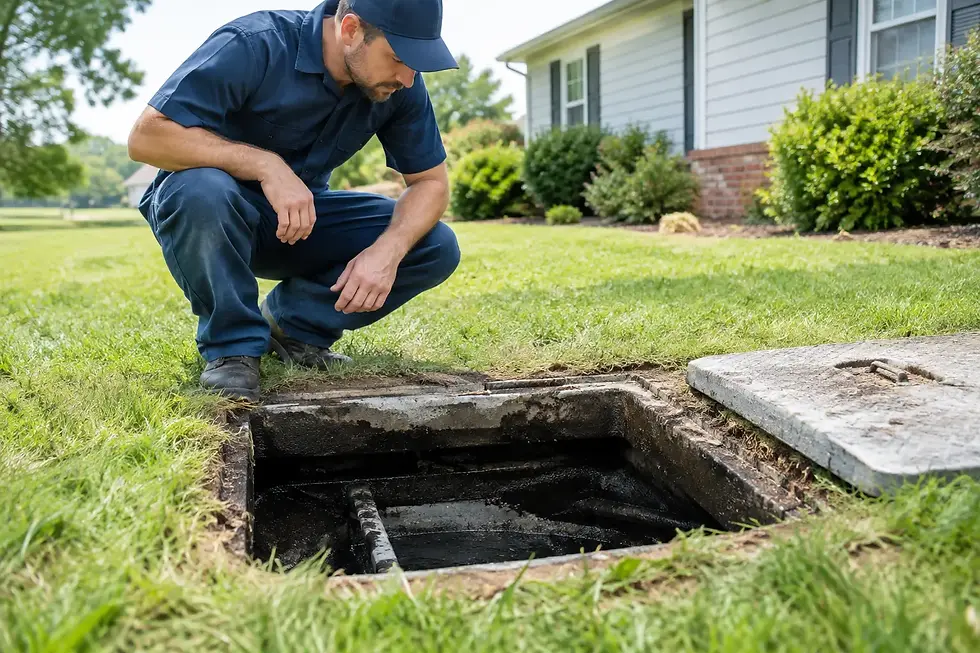
If your tank has risers with secure lids at grade, you can visually check the exterior condition without opening the system. Confirm that lids are intact, secure, and not buried under landscaping materials. A proper riser makes future pumping and inspection easier while avoiding unnecessary excavation.
Opening a tank is not a homeowner job. Septic gases can overcome a person quickly, and a damaged or unsecured lid creates a serious fall hazard. A septic professional can open the access points safely, inspect the tank structure, measure sludge and scum levels, check inlet and outlet baffles, and verify whether an effluent filter needs cleaning.
That internal inspection matters because pumping is not the same as inspection. Pumping removes accumulated solids. Inspection identifies cracked tanks, missing baffles, leaking connections, clogged filters, root intrusion, and evidence that solids have moved toward the leach field. Catching those issues early can prevent damage that is far more costly to correct.
Know When the Leach Field Needs Professional Testing
The leach field is the part of the system that often determines whether a repair is straightforward or a major project. It receives clarified wastewater from the tank and relies on soil conditions to finish treatment. When it fails, the answer is not always to replace the tank. In fact, a new tank will not fix saturated soil, crushed distribution lines, poor drainage, or a field damaged by traffic.
A professional evaluation may include checking the distribution box, inspecting lines with a camera, probing for saturation, reviewing elevation and drainage, and assessing the condition of the field. The exact scope depends on the age of the system, visible symptoms, property records, and whether the inspection is for routine maintenance, a home sale, or an active failure.
If sewage is surfacing, fixtures are backing up, or the system alarm is sounding, limit water use immediately. Stop laundry, avoid long showers, and do not send more water into the system than necessary. Then call a qualified septic contractor. Waiting for the problem to clear on its own can contaminate the yard, damage the home, and turn a targeted repair into a full replacement.
Protect the System Between Inspections
A septic system does not need complicated products to work well. It needs sensible water use, routine pumping based on household size and tank capacity, and protection from damage. Avoid flushing wipes, grease, feminine products, paper towels, medications, cat litter, and anything labeled flushable that does not break down like toilet paper.
Be cautious with septic additives that promise to eliminate pumping or restore a failed field. A healthy system already has the bacteria it needs. Additives cannot correct broken pipes, overloaded soil, poor drainage, or years of neglected maintenance. The better investment is a documented maintenance schedule and an honest evaluation when conditions change.
For homeowners in Southern New Hampshire and Massachusetts, freeze-thaw cycles, high groundwater, ledge, and seasonal rain can all affect site conditions. If your septic area is wet every spring, do not write it off as normal without checking where the water is coming from. A drainage issue around the field or foundation may be putting the entire property at risk.
A good inspection is less about finding something dramatic and more about refusing to ignore small changes. Keep records, watch the ground and plumbing, protect the leach field, and act early when the system gives you a warning. That is how you protect your home, your yard, and the money you have invested in both.


Comments