

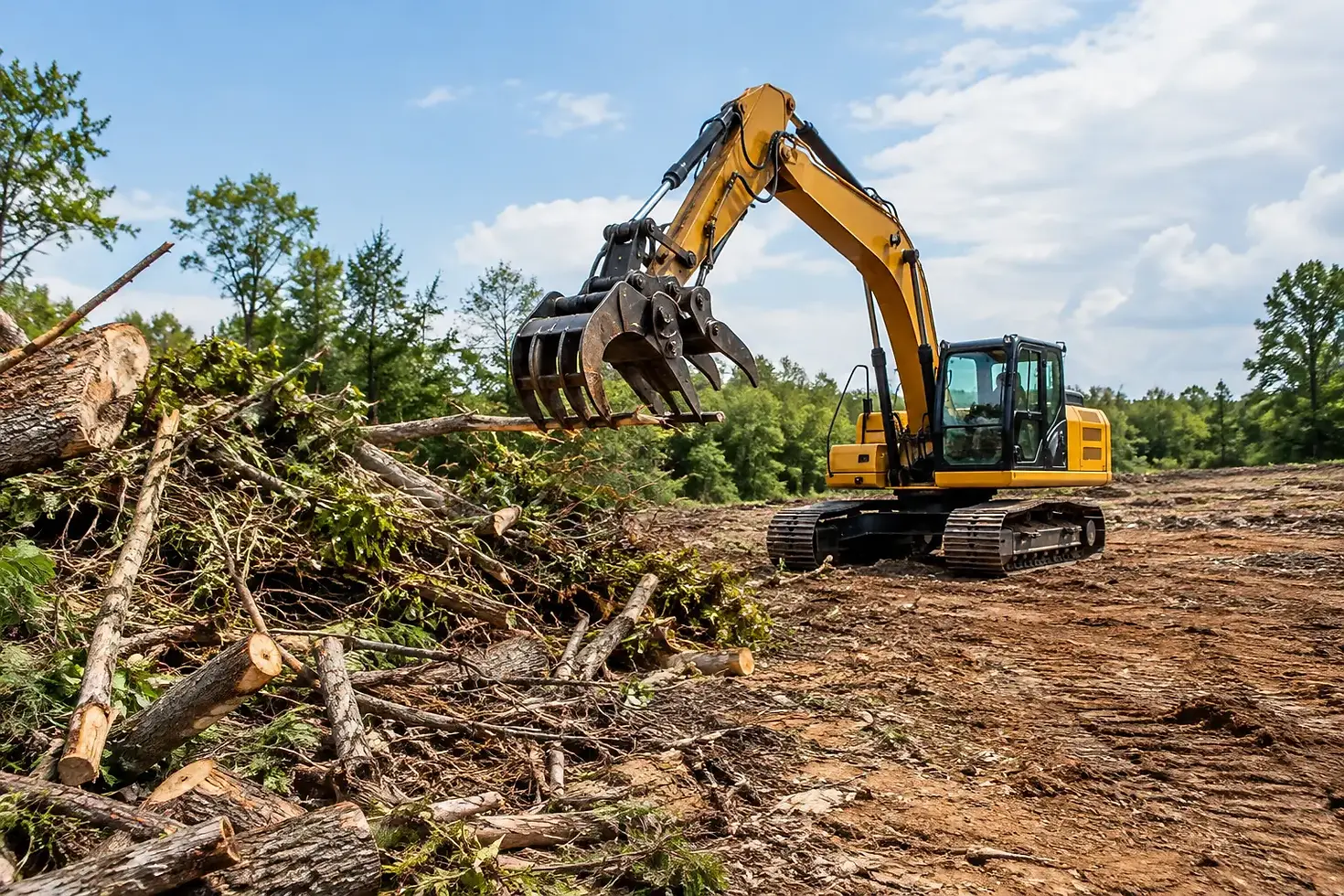
Lot Clearing That Sets Your Project Up Right

A wooded or overgrown property can look like a simple cleanup job until equipment starts moving. Proper lot clearing is the first real construction decision on your property. It affects where water goes, whether a driveway holds up, how a foundation is supported, and whether septic, utilities, or outdoor improvements have room to work as planned.
Cutting down trees is only one part of the job. A cleared lot still needs sound grading, proper stump and root removal, controlled material handling, and a plan that fits what you intend to build. Skipping those steps may save money at the start, but it often creates expensive corrections once the project is underway.
Lot Clearing Is More Than Removing Trees
Every site has its own conditions. Some properties have mature hardwoods, heavy brush, stone walls, ledge, wet ground, old fill, or slopes that send runoff toward the house. A good clearing plan accounts for those conditions before machinery arrives.
The work may include tree and brush removal, stump removal, demolition of old sheds or structures, removal of debris, rough grading, and preparation for excavation. On a new home site, clearing may also tie directly into driveway construction, foundation excavation, septic installation, and water or sewer line work. For an existing home, it may be the first step toward an addition, garage, pool, patio, retaining wall, or drainage correction.
The goal is not to leave bare dirt. The goal is to create a usable site that is ready for the next phase without causing water, soil, or access problems later.
Start With the Plan, Not the Machine
Before clearing begins, the project needs clear boundaries. Homeowners should know what stays, what goes, and what the cleared area will become. That sounds basic, but it prevents common mistakes such as removing healthy trees that provide privacy, clearing beyond the needed construction area, or damaging a section of the property needed for drainage or future use.
A contractor should review access for trucks and equipment, existing utility locations, property lines, slopes, visible drainage paths, and any structures that need protection. If the project involves a new home, addition, septic system, or utility work, the clearing limits should match the approved layout as closely as possible.
In Southern New Hampshire and Massachusetts, site conditions can change quickly from one side of a property to the other. A seemingly dry area may hold water during spring thaw. Shallow ledge can change excavation costs. Large trees near a planned foundation can leave root systems that interfere with grading or settlement if they are not handled correctly.
What Should Be Removed and What Should Stay?
The right answer depends on the project. For a new build, the building footprint, driveway, septic area, utility route, and working space may all need to be cleared. For a backyard project, selective clearing is often smarter. Keeping the right trees can preserve shade, privacy, and the natural character of the property.
However, trees immediately next to new construction are not always an asset. Roots can affect excavation, and large branches can become a long-term risk near a roof, retaining wall, or patio. Trees with poor structure, visible decline, or unstable soil around the base should be assessed before they become a problem.
Brush and small growth should not simply be pushed into a low area or buried where future work will occur. Buried organic material breaks down over time. That can leave soft spots, settlement, and uneven ground under lawns, driveways, and hardscape features. Material needs to be removed, processed, or placed only where it will not compromise the finished site.
Stump Removal Matters More Than Many Owners Expect
Leaving stumps behind can limit how the property is used and create future maintenance headaches. They make mowing difficult, attract insects as they decay, and can interfere with excavation, drainage work, and landscaping. More importantly, the root mass beneath a large stump can affect the stability of areas that need to be graded or built on.
Grinding a stump can be appropriate for some landscape situations, especially where no construction is planned nearby. Full removal is often the better choice when the area will support a driveway, building addition, utility trench, patio, pool, or new lawn grade. The method should match the use of the area, not just the lowest immediate cost.
After removal, the resulting hole needs proper backfill and compaction. Filling it loosely with brush, chips, or topsoil is a shortcut that can lead to a sunken area later.
Protect Drainage While the Ground Is Open
Clearing changes the way rain and snowmelt travel across a property. Removing vegetation exposes soil, and changing the grade can send water toward a house, driveway, neighbor's property, or septic area. This is one of the biggest reasons a clearing project should be planned alongside the rest of the site work.
A contractor should identify where water currently flows and where it needs to go after the work is complete. Sometimes that means preserving a natural drainage route. Other times it means creating swales, installing drainage, building a retaining wall, or adjusting finished grades to direct water away from structures.
Poor drainage is not always obvious in dry weather. Water around foundations, washed-out driveways, muddy lawns, and cracked hardscape often trace back to grading decisions made early in the project. Correcting those problems after a house, patio, or driveway is installed costs far more than addressing them during site preparation.
Understand Permits, Wet Areas, and Site Limits
Lot clearing may involve local permit requirements, especially when work is near wetlands, streams, steep slopes, public roads, or septic systems. Tree removal itself may be straightforward, but grading, filling, driveway access, drainage changes, and land disturbance can bring additional requirements.
Do not assume a contractor can clear right up to a wet area, property line, or roadway because the area looks unused. Site restrictions exist for a reason, and ignoring them can delay the project or require costly restoration work. A professional approach includes checking the project scope before clearing begins and coordinating the work with the larger construction plan.
Utility safety is just as critical. Underground electric, gas, water, sewer, cable, and communication lines must be identified before excavation or stump removal. This is not a step to rush through. Damaging a buried line can create a serious safety issue and stop the job immediately.
Plan for the Material, Not Just the Removal
Trees, brush, stumps, rock, old concrete, and debris all have to go somewhere. The disposal plan affects the budget, schedule, and condition of the property during construction. Some wood may be chipped, hauled away, or saved for firewood. Clean fill or usable topsoil may be retained for final grading. Concrete and demolition debris need to be handled separately.
A clear proposal should explain what is included in removal and disposal. Homeowners should ask whether stumps are being removed or only cut low, whether material will be hauled away, and whether rough grading is part of the price. Those details matter because a property can look cleared while still requiring substantial work before it is ready for the next contractor.
Choose Clearing That Supports the Entire Project
The lowest clearing price is not always the best value. A low bid may leave stumps, bury debris, ignore runoff, or clear without considering access for the next phase. Those shortcuts can turn a straightforward property-preparation job into a drainage repair, regrading project, or unexpected excavation expense.
The better approach is to look at lot clearing as part of the finished property, not a separate task. W. Santos Construction Services approaches site work with that bigger picture in mind, from clearing and excavation through foundations, utilities, drainage, concrete, and hardscape work.
Before you remove the first tree, decide what the ground needs to do when the project is finished. It should carry the work planned for it, move water where it belongs, and give you a property that is easier to build on and enjoy for years.


Comments