

Concrete Sidewalk Installation That Lasts

A sidewalk can look like a simple strip of concrete until the first winter exposes every shortcut underneath it. Concrete sidewalk installation is not just about pouring a neat path from the driveway to the front door. It is about building a stable walking surface that sheds water, handles freeze-thaw cycles, and stays where it belongs instead of cracking, heaving, or sinking.
For homeowners in Southern New Hampshire and Massachusetts, the ground conditions matter as much as the finished surface. A properly installed sidewalk improves curb appeal and daily access, but it also helps direct foot traffic away from soft lawn areas, muddy entrances, and problem spots near the foundation. The work has to start below grade if it is going to last above grade.
What Makes a Concrete Sidewalk Last?
Concrete is strong, but it is not flexible. When the soil beneath a sidewalk shifts, holds water, or freezes unevenly, the slab is forced to move. That movement commonly shows up as cracks, low spots, separated sections, and trip hazards.
The answer is not to simply pour thicker concrete over poor ground. Thickness has a role, but base preparation, drainage, slope, reinforcement where needed, and properly placed control joints are what give a sidewalk a fair chance through years of New England weather.
A standard residential sidewalk is often four inches thick, but the right specification depends on how it will be used. A walkway carrying only foot traffic needs a different design than a path that must handle wheelbarrows, lawn equipment, or occasional vehicle access. Areas near driveways, steps, porches, and retaining walls may require added attention because those transitions concentrate movement and water.
Start With the Ground, Not the Concrete
The most common sidewalk failures begin before the truck arrives. If a contractor removes only a thin layer of grass, places concrete on loose soil, and calls it done, the surface may look fine for a season. Then the base settles or frost works its way underneath, and the repair bill follows.
A dependable installation begins by laying out the path and excavating to the proper depth. The crew needs enough room for both the compacted gravel base and the planned concrete thickness. Organic topsoil, roots, loose fill, and soft pockets need to come out. They are not a stable foundation for a finished concrete surface.
Next comes a well-compacted aggregate base. The required depth varies with soil conditions, site drainage, and the sidewalk's use, but it should be substantial enough to support the slab evenly. Compaction is not a cosmetic step. It reduces voids in the base and helps prevent the concrete from settling after the job is complete.
On properties with wet ground, clay-heavy soil, or known drainage issues, the base work may need to go further. A sidewalk should not become a dam that holds water against the house, and it should not be built over ground that stays saturated. Sometimes the right fix includes regrading, adding drainage, or correcting downspout discharge before the concrete work begins.
Concrete Sidewalk Installation Needs Proper Drainage
Water is one of the biggest reasons concrete around a home fails early. Water gets below the slab, freezes, expands, and pushes sections upward. When it thaws, the slab may not return to its original position. Repeat that process over several winters and even a new sidewalk can become uneven.
Every sidewalk needs planned slope. The finished grade should move water away from the house and toward an appropriate drainage area, without sending runoff toward a neighbor, driveway, or low spot that already collects water. The slope is subtle enough for comfortable walking, but it must be intentional.
This is especially important where a walkway meets front steps, a garage apron, a patio, or a foundation wall. Those connections need to be clean and usable, yet water must not be directed into the structure. If there is water around the foundation now, installing a new sidewalk without addressing that issue can hide the problem for a while rather than solve it.
Drainage is also why an on-site evaluation matters. No two properties have the same grade, soils, roof runoff, or traffic pattern. A sidewalk design that works on a dry, level lot may be the wrong approach for a sloped property with a wet basement history.
Joints Are Planned Cracks, Not a Sign of Bad Work
Concrete naturally shrinks as it cures. Control joints give it a predetermined place to crack instead of allowing random cracks across the surface. When joints are spaced and cut correctly, they create a clean pattern that manages normal movement.
Expansion material is also used where the sidewalk meets fixed structures such as a foundation, steps, or existing slab. This separation gives the concrete room to move slightly without pressing hard against the adjacent structure.
A few hairline cracks can occur in concrete, even with good workmanship. Anyone promising concrete that will never crack is not being honest. The goal is to minimize cracking, keep it controlled, and prevent the wider movement problems caused by poor base preparation and water below the slab.
Finish Matters, but Timing Matters More
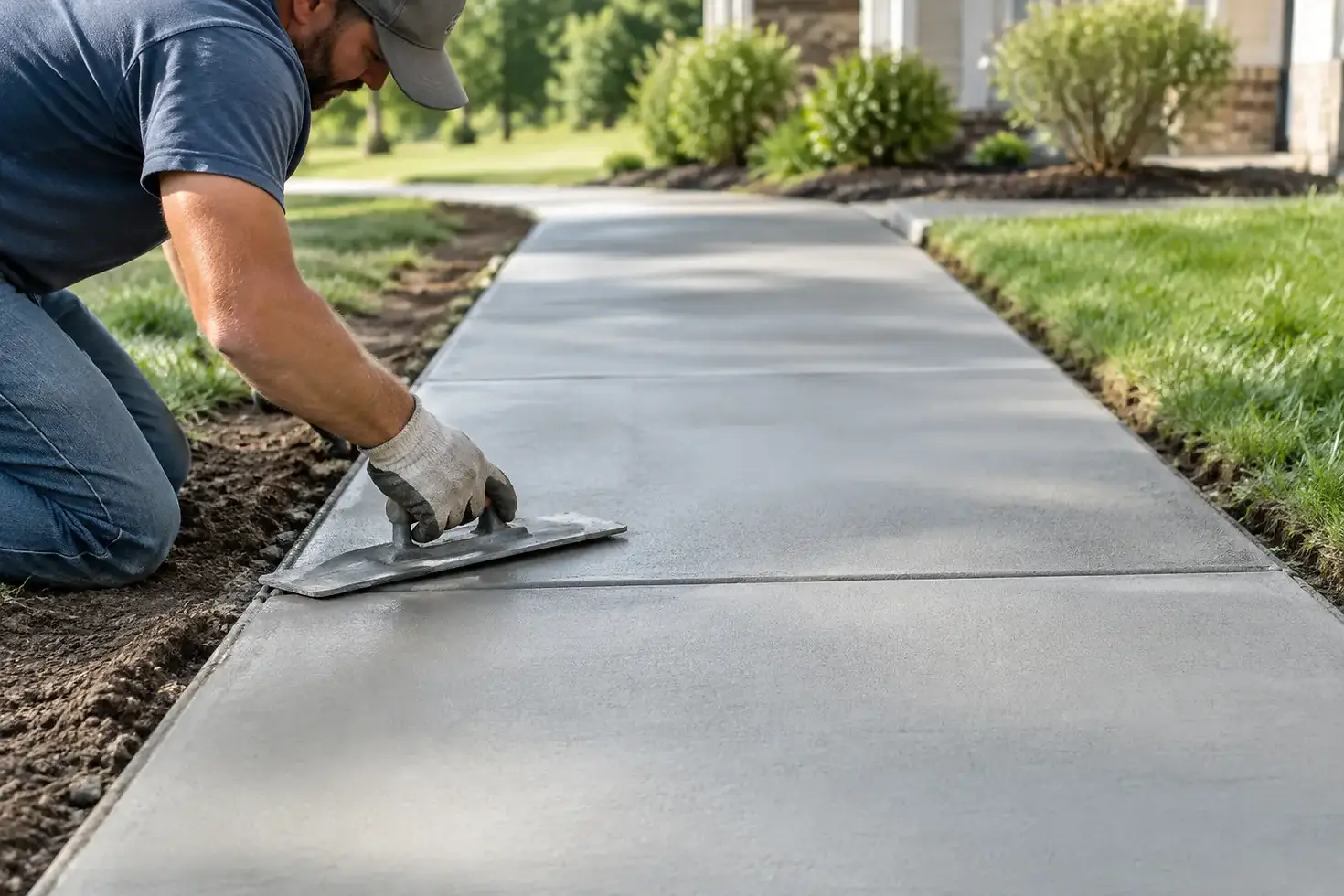
A sidewalk should be safe to walk on in rain, snow, and muddy spring weather. For most residential walkways, a broom finish provides the traction homeowners need without making the surface difficult to shovel or uncomfortable underfoot.
The finish must be completed at the right time. Working concrete too early can weaken the surface and create scaling problems later. Overworking it can bring excess water and paste to the top, which may leave a weak layer that flakes under freeze-thaw exposure and deicing materials.
Edges should be finished cleanly, and the walkway should tie into the surrounding grade without creating awkward lips or places for water to sit. Details like these may seem small on installation day, but they affect safety, maintenance, and how the project looks for years.
When Removal and Replacement Is the Better Choice
Not every damaged sidewalk needs full replacement. A single settled panel can sometimes be lifted or repaired, depending on the cause and the condition of the concrete. But patching badly cracked, heaved, or crumbling slabs often turns into a short-term fix with a visible seam.
Replacement is usually the better value when multiple panels have moved, the base has failed, drainage is poor, or the concrete is deteriorating from the bottom up. The old material needs to be removed so the crew can see what caused the failure in the first place. Pouring new concrete over the same unstable conditions only repeats the problem.
A good contractor should explain whether repair is reasonable or whether removal and replacement will save money over time. That is the kind of conversation homeowners deserve before committing to a project.
Plan the Sidewalk Around How You Use the Property
The right walkway width and route depend on the property. A narrow path may work along the side of a house, while a front entry path needs enough room for two people to walk comfortably. Curves can soften the look of a landscape, but straight runs are often simpler, more economical, and easier to shovel.
Think about where people actually walk. A path from the driveway to the front door should follow the natural route, not force guests across lawn or landscaping. Consider trash bins, garden gates, mail delivery, outdoor equipment, and winter snow storage as well. These practical details are where a well-planned project earns its value.
Decorative borders, stamped concrete, and masonry features can be added when they fit the property and budget. Still, the base, drainage, and layout should come first. A plain gray sidewalk installed correctly will serve a home better than a decorative surface built on shortcuts.
Choose Workmanship Over the Lowest Number
Concrete pricing can vary because project conditions vary. Access for equipment, demolition needs, excavation depth, base material, drainage corrections, walkway shape, and site cleanup all affect the cost. A low quote may leave out work that is not visible once the concrete is poured.
Before choosing a contractor, ask how the base will be prepared, where water will drain, how joints will be handled, and what happens if unsuitable soil is found. Clear answers matter. So does a contractor willing to look at the whole property instead of treating the sidewalk as an isolated strip of concrete.
At W. Santos Construction Services, LLC, the focus is on correcting the conditions that cause concrete to fail, not covering them up. A sidewalk should feel like a permanent improvement to your property, not another project you have to revisit after a few hard winters.
If your current walkway is cracked, uneven, or sending water where it should not go, start by finding the cause. A properly planned sidewalk can make every trip to the door safer, cleaner, and easier - and it should keep doing that long after the fresh concrete color has faded.


Comments