


What Causes Septic Odors Around Your Home?

A septic smell is not something to ignore, especially when it appears suddenly near the house, over the drainfield, or inside a bathroom. Homeowners asking what causes septic odors are usually dealing with more than an unpleasant nuisance. The smell can come from a simple dry drain trap, but it can also point to a blocked vent, a damaged tank cover, saturated soil, or a septic system that is no longer treating wastewater properly.
The key is figuring out where the odor is strongest, when it appears, and whether other warning signs are showing up. Catching the problem early can mean a manageable repair instead of a damaged drainfield or a costly system replacement.
What Causes Septic Odors Inside the House?
When the odor is strongest indoors, the septic tank itself is not always the direct problem. Plumbing fixtures and venting are often the first places to check.
Dry drain traps
Every sink, shower, tub, and floor drain should have a P-trap that holds water. That water creates a seal that keeps sewer gases from moving back into the home. In a guest bathroom, basement floor drain, utility sink, or other fixture that does not get used often, the water can evaporate.
A dry trap can create a strong sewer smell with no obvious plumbing leak. Running water for a minute or two may refill the trap and solve the issue. If the odor returns quickly, there may be a cracked trap, a venting problem, or another issue that needs closer inspection.
Blocked or poorly functioning plumbing vents
Your plumbing vent carries sewer gases safely above the roofline and helps drains flow correctly. When that vent is blocked by leaves, a bird nest, ice, snow, or debris, gases may find another path into the house. You may also hear gurgling drains or notice toilets flushing poorly.
This is especially relevant in New England winters. Snow and frost can affect a roof vent, while heavy storms can expose drainage and venting issues that were already developing. Clearing a vent is not a job for guesswork from a ladder. A plumbing professional can confirm whether the vent is obstructed and whether the system was installed correctly.
Loose toilet seals or damaged plumbing connections
A failing wax ring beneath a toilet can allow sewer gas to escape even when there is no visible water leak. A cracked pipe, loose cleanout cap, or failed connection in a crawlspace or basement can do the same thing.
If the smell is most noticeable around one toilet, behind a wall, or near a basement utility area, the problem may be on the building plumbing side rather than in the septic field. It still needs attention. Sewer gas inside a home is not normal, and masking it with air freshener does not address the source.
What Causes Septic Odors Outside?
Outdoor septic odors are more likely to involve the tank, pump components, distribution system, or drainfield. A brief odor near an open tank during pumping or service is expected. A regular smell around the yard is not.
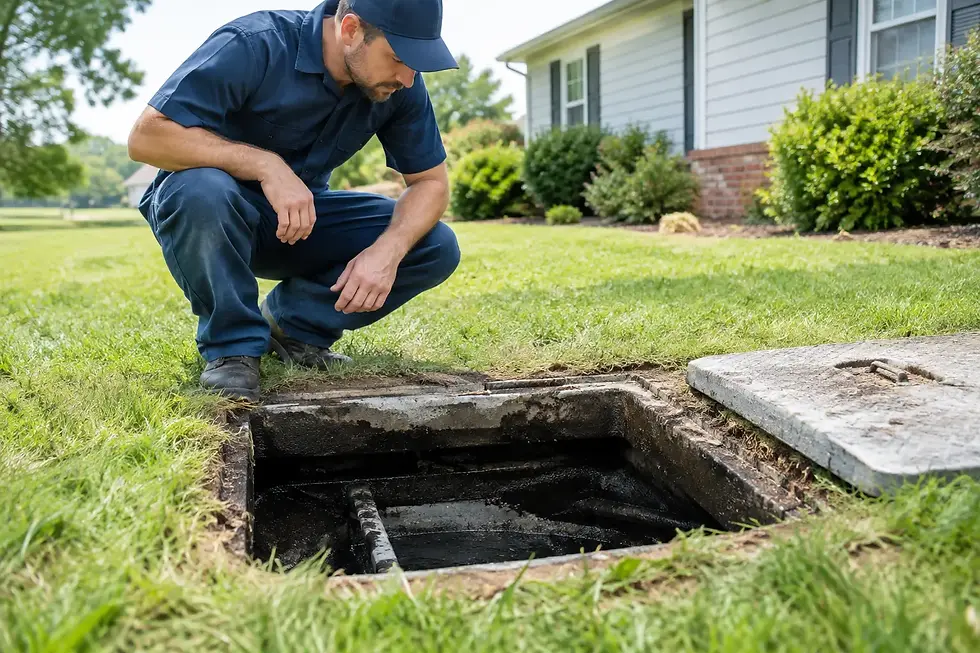
A loose, damaged, or uncovered septic tank lid
Septic tanks produce gases as wastewater breaks down. The tank lid and risers are designed to keep those gases contained while allowing the system to vent properly through the home’s plumbing vent. If a lid is cracked, shifted, buried improperly, or not sealed after service, odors can escape directly into the yard.
This can happen after landscaping, vehicle traffic, frost heave, excavation work, or a previous repair that was not finished correctly. Tank covers should be secure, structurally sound, and installed at the proper grade. Never walk on a questionable lid or attempt to enter a septic tank. Septic gases can be dangerous, and a failed cover is a serious safety hazard.
A full tank or clogged effluent filter
A septic tank needs routine pumping based on household use, tank size, and the system design. When solids build up, they can reduce the tank’s working capacity and interfere with the flow of wastewater. Some systems also have an effluent filter at the outlet that can clog if it is not serviced.
A full tank does not always create a smell right away, but it can contribute to slow drains, toilet backups, alarms on pumped systems, and wastewater moving where it should not. Pumping may solve the immediate buildup issue, but it will not fix a broken baffle, blocked outlet, or drainfield failure. A good inspection looks beyond the tank level.
Drainfield saturation or failure
The drainfield is where properly treated liquid leaves the septic tank and filters through soil. When the soil is saturated, compacted, damaged, or unable to accept wastewater, odors can rise to the surface. The area may stay wet, feel soft underfoot, grow unusually lush grass, or develop standing water.
A drainfield can become overloaded for several reasons: excessive water use, leaking fixtures, poor grading, roof runoff directed toward the field, high groundwater, or years of solids escaping the tank because pumping was delayed. In some cases, the system was undersized or installed poorly from the beginning.
This is where shortcuts become expensive. Covering a wet area with topsoil, adding gravel, or trying to hide the smell does not restore a failing drainfield. The real problem may require site evaluation, drainage corrections, repairs to the distribution components, or a properly designed replacement system.
Surface water and poor property drainage
Heavy rain, spring thaw, and high groundwater can push a marginal septic system past its limit. Water that should be directed away from the house and drainfield can flood the soil that needs to absorb septic effluent. The result can be odors, slow fixtures, backups, and soggy ground.
Proper grading matters. So do downspout locations, driveway runoff, curtain drains, and the condition of swales and drainage paths across the property. A septic issue and a drainage issue are often connected, particularly on older properties or lots where previous work changed how water moves.
Damaged pipes, pump failures, and distribution problems
Not every septic system is a simple tank and field. Some use pumps, alarms, dosing tanks, pressure distribution, or advanced treatment components. If a pump fails, a float sticks, a line cracks, or a distribution box shifts or clogs, wastewater may not move through the system as designed.
These problems can create odors in a specific location, sometimes near the tank or field and sometimes closer to the home. An alarm should always be taken seriously. Do not keep using water as usual while waiting to see if it goes away. Reducing water use can help prevent a backup until the system is inspected.
How to Tell Whether the Odor Is Urgent
A faint odor after a major storm may be a sign that wet ground is affecting the system, but it still deserves attention if it continues. Strong or recurring odors, especially when combined with plumbing symptoms, are more urgent.
Call for professional service promptly if you notice sewage backing up into tubs or toilets, standing wastewater near the tank or drainfield, a septic alarm, slow drains throughout the house, or a strong sewer smell indoors. Keep children, pets, and vehicles away from any wet or suspect septic area.
Do not open the tank yourself to investigate. Septic tanks can contain hazardous gases and low oxygen levels, and covers can be unstable. Also avoid pouring chemical drain cleaners, bleach in heavy amounts, or septic additives into the system as a quick fix. Those products can damage plumbing, disrupt the tank’s treatment process, or simply delay the real repair.
The Right Way to Track Down Septic Odors
Start with the basics. Note whether the smell is inside or outside, which fixtures are affected, whether the odor follows rain, and whether it is worse at certain times of day. Check infrequently used sinks, showers, and floor drains for dry traps. Look for wet areas in the yard, but do not disturb tank covers or components.
From there, the system needs to be evaluated based on the evidence. That may include checking the tank condition and liquid levels, inspecting the effluent filter and baffles, testing pumps and alarms, reviewing the drainfield, and looking at site drainage. The right repair depends on the cause. A dry trap needs water. A broken pipe needs repair. A saturated or failing field needs a real site and septic solution, not a temporary cover-up.
At W. Santos Construction Services, we have seen how often water management and poor previous workmanship turn a septic concern into a larger property problem. The goal is to identify what failed, explain the options clearly, and correct it in a way that protects the home and the land around it.
A septic odor is your property telling you something has changed. Pay attention to it early, reduce unnecessary water use if symptoms are worsening, and get a qualified professional to find the source before a smell turns into a backup or a failed system.


Comments