

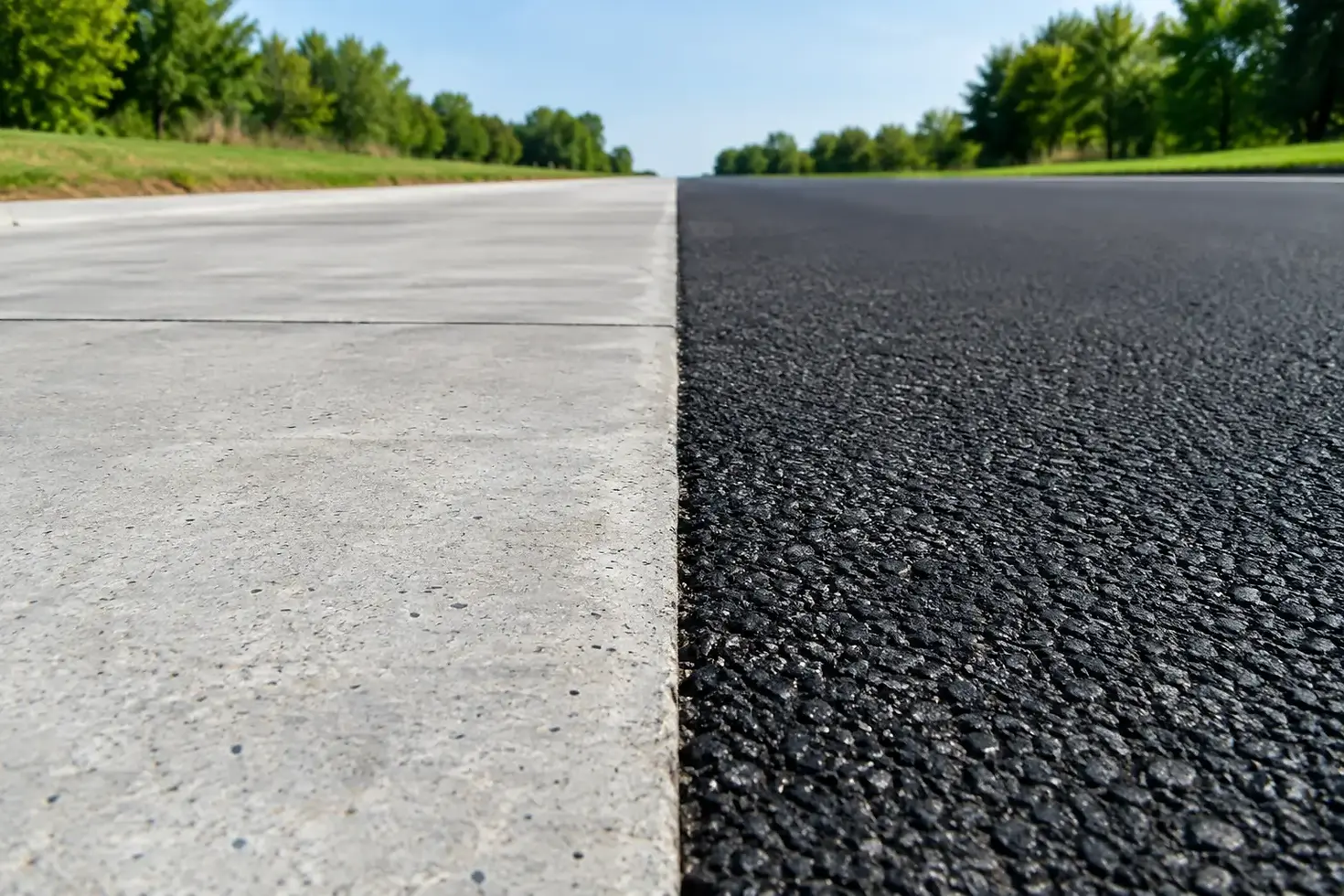
Concrete Versus Asphalt: Which Surface Holds Up?

A cracked driveway is rarely just a driveway problem. In New England, frost movement, water runoff, poor base preparation, and heavy vehicles can turn a low-price installation into an expensive repair. When property owners weigh concrete versus asphalt, the right answer depends on how the surface will be used, what lies beneath it, and whether the site drains properly.
Both materials can perform well. Both can fail early when installed over unstable soil, an undersized base, or water that has nowhere to go. The goal is not to pick the material with the best sales pitch. It is to choose a surface and installation plan that will hold up on your property.
Concrete Versus Asphalt: The Main Difference
Concrete is a rigid slab. It spreads vehicle weight across the surface and can provide a clean, long-lasting finish for driveways, walkways, patios, steps, and pads. Asphalt is a flexible pavement material. It has some ability to move with minor ground movement and is commonly used for driveways and larger paved areas.
Concrete generally costs more upfront, takes longer to install and cure, and can be more difficult to repair without visible patch lines. In return, it can last for decades when the base, drainage, joints, and installation are handled correctly. It also gives homeowners more design options, including decorative finishes, stamped patterns, borders, and colored surfaces.
Asphalt is often less expensive initially and can usually be installed faster. It is a practical choice for many driveways, especially where budget is a major factor. But it needs ongoing maintenance, including crack filling and periodic sealing. It can soften in high heat, develop depressions where vehicles sit repeatedly, and deteriorate quickly if water reaches the base beneath it.
The material matters, but the site work matters more than many people realize.
Start With the Ground Below the Surface
A new driveway or patio is only as good as its foundation. This is where shortcuts create problems that show up later as cracks, settling, standing water, and uneven edges.
Before concrete or asphalt goes down, the existing soil needs to be evaluated. Soft areas, organic material, poor fill, wet ground, and old failed pavement may need to be excavated and replaced. A properly compacted gravel base provides support and helps manage water below the finished surface. The thickness and type of base should match the soil conditions, expected vehicle load, and drainage plan.
For example, a light-use walkway does not need the same build-up as a driveway used by pickup trucks, delivery vehicles, trailers, or a plow truck. A driveway built over wet or clay-heavy soil may need more correction than one on stable, well-drained ground. Adding surface material without addressing poor base conditions simply hides the problem for a while.
Drainage also needs a clear plan. Water should move away from foundations, garages, retaining walls, and the paved area itself. Low spots at the end of a driveway or alongside a foundation can create freeze-thaw damage and undermine the base. If a surface has failed more than once, the problem may not be the concrete or asphalt. It may be the grading, runoff, or water below ground.
When Concrete Is the Better Choice
Concrete is a strong choice when appearance, long-term value, and a more permanent finished surface are priorities. It works especially well for patios, sidewalks, front entries, stairs, hot-tub pads, pool surrounds, and driveways where homeowners want a crisp, finished look.
A properly installed concrete driveway can handle normal residential traffic for many years. Concrete is also a good option when you want defined edges that do not shift or spread over time. Decorative stamped concrete can give a patio or walk a stone, brick, or slate appearance without building each surface from individual units.
Concrete does have to be installed with care. It needs the right thickness, reinforcement where appropriate, properly placed control joints, and adequate curing time. Control joints are not a sign of poor work. They are planned locations that encourage concrete to crack in a controlled line as it naturally shrinks and responds to temperature changes.
In New Hampshire and Massachusetts, winter maintenance deserves consideration as well. Deicing products can damage concrete, especially newer concrete or slabs that have already begun to deteriorate. Use products intended for concrete, avoid excessive salt, and do not use harsh chemicals that can scale the surface. A good installation helps, but no exterior surface is maintenance-free in a freeze-thaw climate.
Concrete may not be the best fit when a project needs the lowest possible upfront cost, when access requires a very fast return to vehicle traffic, or when future utility work is likely to cut through the area. It can be repaired, but matching an old concrete slab exactly is difficult.
When Asphalt Makes More Sense
Asphalt is often the practical choice for a standard residential driveway. It provides a smooth, dark surface, handles normal vehicle traffic well, and generally has a lower upfront cost than concrete. For a long driveway, the initial savings can be significant.
Because asphalt is flexible, it can tolerate small amounts of movement better than a rigid concrete slab. That does not mean it is immune to frost heaves or settling. If the base moves substantially, asphalt will still crack, dip, or rut. The difference is that asphalt repairs are often less noticeable and easier to blend into the existing pavement.
Asphalt also has its own maintenance requirements. Small cracks should be addressed before water gets through them. Once water reaches the gravel base and freezes, damage can spread quickly. Sealcoating can help protect the surface from weather and oxidation, but it is not a repair for poor drainage or a failing base.
Homeowners should also expect asphalt edges to need support. Vehicles that regularly drive off the edge can break it down, particularly where the driveway has no curbing, shoulder support, or stable gravel transition. Parking in the same spot during hot weather can leave marks or depressions, and sharp turns from heavy vehicles can scuff the surface.
Cost Is More Than the Installation Price
Comparing quotes only by square foot can lead to the wrong decision. A lower proposal may leave out excavation, base replacement, compaction, drainage work, thickness, reinforcement, edge treatment, or site restoration. Those details are where the lifespan of the project is decided.
Concrete usually has the higher initial price, particularly if the project includes decorative work, thickened edges, steps, or detailed forming. Asphalt is usually more affordable upfront, but it requires routine maintenance over its lifespan. Neither option is automatically cheaper over time because the answer depends on the site and the level of maintenance it receives.
Ask what is included in the scope. A clear proposal should explain what will be removed, how the base will be prepared, where water will drain, the intended material thickness, and what happens at edges and transitions. If an existing surface is badly cracked or sunken, simply paving or pouring over it is rarely a long-term fix.
Choosing for Driveways, Patios, and Walkways
For a driveway, asphalt is often the sensible budget-conscious option, while concrete can be the better long-term finish when appearance and lower routine maintenance are worth the higher initial investment. The traffic pattern, slope, soil, and drainage should guide the choice.
For patios, sidewalks, entryways, and stairs, concrete is usually the stronger fit. It offers more design flexibility, defined forms, and a durable surface for foot traffic. A properly graded concrete patio can also direct water away from the house instead of trapping it against the foundation.
For utility pads, carports, equipment areas, and hot-tub pads, concrete is often preferred because it provides a firm, level platform. These projects need careful planning for load, thickness, access, and water management. A pad that settles can create far more trouble than an uneven surface.
Do Not Ignore Warning Signs
A few hairline cracks in concrete do not always mean the slab is failing. Wide cracks, vertical displacement, recurring puddles, crumbling edges, or a slab pulling away from a garage or foundation deserve a closer look. The same goes for alligator cracking, deep ruts, and soft spots in asphalt.
Surface repairs can help when the base is still sound. When water, poor compaction, or unstable soil is the real cause, patching over the damage will not stop it from returning. Correcting the underlying conditions may cost more at the start, but it protects the money you put into the finished surface.
The right surface should fit the property, not just the first number on a quote. Give the ground proper preparation, provide water a place to go, and choose a contractor willing to explain the work beneath the surface. That is how a driveway, patio, or walkway stays useful long after the job is finished.


Comments